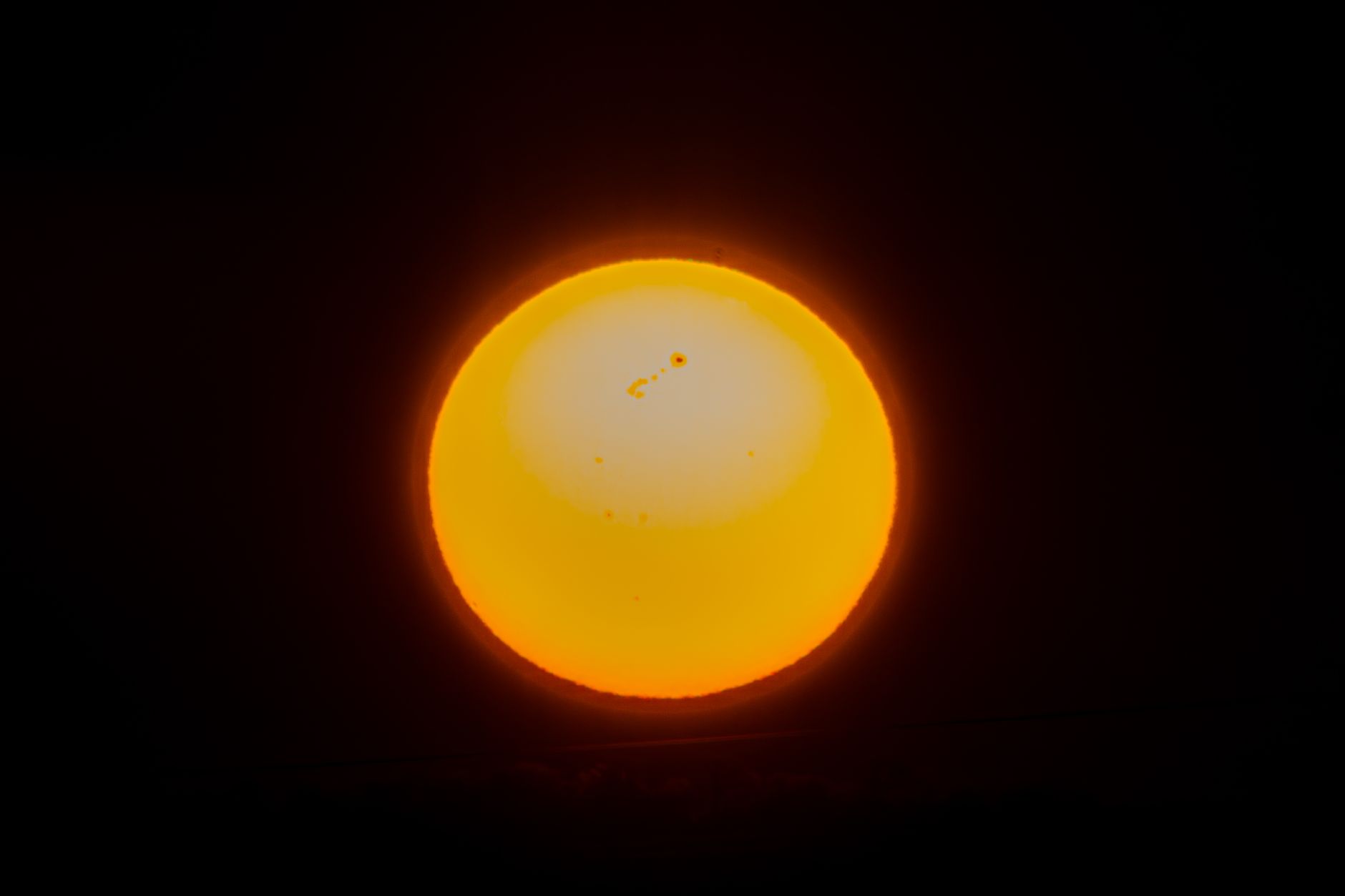
Fusion has been thirty years away since roughly the 1950s, and the joke is now older than most of the people telling it. The reason is not incompetence or a conspiracy. It is that fusion requires physical conditions which, in this solar system, otherwise occur only inside stars.
The physics has never been in doubt. The engineering is the problem, and it is a genuinely brutal one.
Why anyone is trying
Fusion fuses light nuclei into heavier ones and releases energy. It is the reaction powering the sun, and its attractions as an energy source are real.
The fuel is hydrogen isotopes, one of which is extracted from seawater. There is no chain reaction, so a meltdown is not physically available: any disturbance stops the reaction rather than accelerating it. It produces no carbon dioxide, which is why it appears in every serious discussion of long-term emissions. It does produce radioactive waste, from neutrons making the reactor walls radioactive, but with a lifetime measured in about a century rather than tens of thousands of years.
What fusion actually is
Atomic nuclei are positively charged, and like charges repel. To fuse two nuclei you must push them close enough for the strong nuclear force, which only operates at extremely short range, to take over from that repulsion.
Getting them that close requires enormous speed, which means enormous temperature. The sun manages it at around 15 million degrees, helped by crushing gravitational pressure from an object with the mass of a star.
On Earth there is no such gravity, so the temperature has to compensate. A working reactor needs roughly 100 million degrees, several times hotter than the core of the sun. At that temperature matter is plasma, and no material container survives contact with it.
The two approaches
Magnetic confinement. Hold the plasma in a magnetic field so it never touches a wall. The usual geometry is a tokamak, a doughnut wrapped in superconducting magnets. This is the mainstream route and what ITER, the large international project in France, is built around.
Inertial confinement. Take a fuel pellet the size of a peppercorn, hit it from all sides with the world's most powerful lasers, and compress it so violently that it fuses before it has time to fly apart. This is the approach at the National Ignition Facility in the United States.
Why it is so hard
Four problems, all simultaneous.
- The plasma is unstable. A hundred-million-degree fluid held in a magnetic field is prone to turbulence and sudden disruptions. Controlling it is a live research problem, not a solved one.
- Containment is expensive. Superconducting magnets need to be cooled to near absolute zero, a few metres from the hottest thing in the solar system.
- Neutrons wreck the reactor. The reaction throws off high-energy neutrons, which pass straight through magnetic fields and steadily damage the structure holding everything together. Materials that survive decades of that do not yet exist.
- Tritium is scarce. The favoured fuel mix needs tritium, of which there are only a few tens of kilograms in existence worldwide. A commercial reactor would have to breed its own, which has not been demonstrated at scale.
The three scoreboards
When a headline says fusion achieved "more energy out than in", the first question is which of three quantities is being compared. They differ by a large factor.
| Measure | Compares | Status |
|---|---|---|
| Scientific breakeven | Fusion energy out vs energy delivered to the fuel | Achieved |
| Engineering breakeven | Fusion energy out vs energy drawn from the grid | Not achieved |
| Commercial viability | Electricity sold vs total cost of running the plant | Far off |
The 2022 result at the National Ignition Facility was real and was the first of these. The fuel capsule released more energy than the lasers delivered to it. Producing those laser pulses drew a great deal more from the grid than the reaction released, so on the second measure the experiment was still deeply in deficit. Both statements are true, and headlines rarely carry both.
Nothing here is fake. The confusion is that three very different finish lines share one phrase, and only the first has been crossed.
What has genuinely changed
Two things, and they are not nothing.
High-temperature superconductors have improved enough to allow much stronger magnetic fields, which lets a reactor be substantially smaller for the same performance. Smaller means cheaper and faster to iterate, and it is why the current wave of private fusion companies exists at all.
And there is now real money: billions in private investment rather than only slow public programmes, alongside the surge in electricity demand from data centres that keeps the physical internet running. Demand for clean baseload power has rarely looked stronger.
So how far away is it
Honestly: unknown, and nobody credible will give you a date they would bet a career on. Several companies target demonstration plants in the 2030s, and demonstration is not the same as a plant selling power into a grid.
The thirty-year joke persists because the remaining problems are engineering ones at extreme scale, and those resist prediction in a way physics does not. What can be said is that the reasons for the delay are specific, documented, and being worked on, which is a different situation from a promise that never had a mechanism behind it.