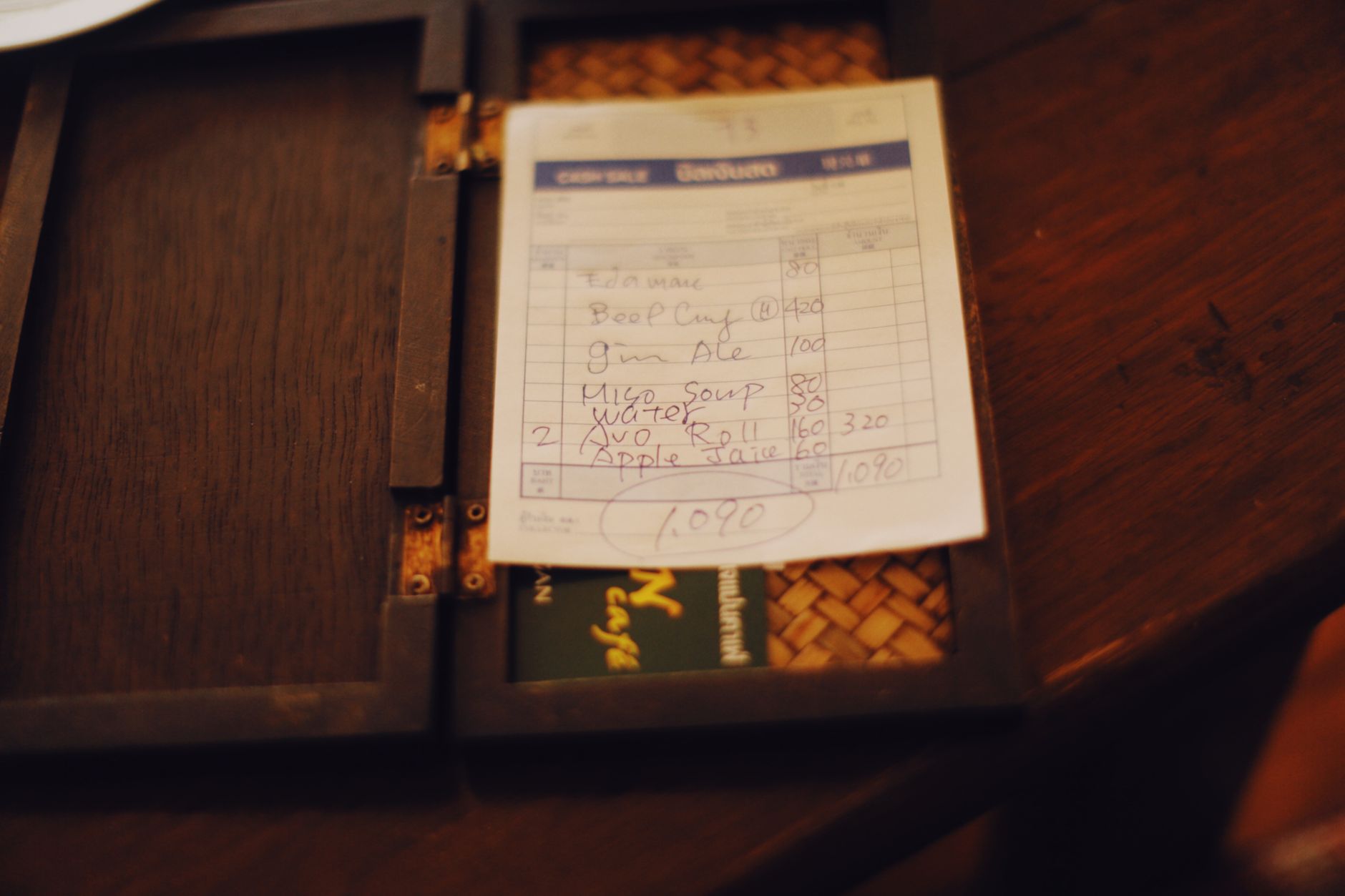
Tipping customs are not about how generous a nation is. They follow almost entirely from one question: does the employer pay the server a full wage, or is the customer expected to?
Where the employer pays, tipping stays small and optional. Where the law allows the employer not to, tipping becomes the wage, and refusing to tip stops being a judgement on the service and becomes a decision about someone's rent.
Who pays the server
The United States is the clearest case. Federal law permits a "tipped minimum wage" far below the standard one, on the assumption that tips make up the difference. The employer is required to top up any shortfall, and enforcement of that requirement is inconsistent.
The practical effect is that in much of the country a server's income is mostly tips. A 20 percent expectation is not a bonus for good service; it is the mechanism by which the labour is paid for. The menu price is, in effect, incomplete.
In most of Europe, Australia and Japan, no such carve-out exists. The server is paid a full wage by the employer, the price on the menu covers it, and a tip is what it says it is: an optional extra for something above expectation.
Where the custom came from
Tipping is European in origin, spread through aristocratic households and coffee houses, and travelled to the United States with returning travellers in the nineteenth century.
It was initially resented there. It was widely described as undemocratic, a European habit of creating servility, and several states passed anti-tipping laws in the early twentieth century. Those laws were repealed within about a decade.
The custom stuck for a reason that is not flattering. After emancipation, some industries, notably railway service and restaurants, hired Black workers at little or no wage on the understanding that customers would tip them. Tipping was, in that period, a way to employ people without paying them. That history is documented, and it is part of why the American debate is unusually heated.
Why Japan finds it rude
In Japan, attentive service is the standard, not an extra to be purchased. Offering money for it implies the service would otherwise have been worse, which reads as an insult to the establishment.
Prices include everything. A tip left on a table is frequently chased down the street and returned, not out of pride but because the staff assume you forgot your change.
Roughly what is expected where
| Place | Restaurant norm | Because |
|---|---|---|
| United States | 18 to 22 percent | Tipped wages are legal |
| United Kingdom | 10 to 12.5 percent, often on the bill | Full wage, tip is a genuine extra |
| France, Italy, Spain | Round up, or nothing | Service usually included by law or custom |
| Japan, South Korea | None | Service is the standard, not an extra |
| Australia, New Zealand | None, or rounding | High minimum wage |
These are norms rather than rules, and they move. Check locally before assuming, because getting it wrong in either direction is uncomfortable.
What tip screens changed
The recent shift is not really about restaurants. It is about the payment terminal.
When a card machine turns towards you suggesting 20, 25 or 30 percent for a counter transaction, several things have quietly happened. The prompt appears in situations that never involved tipping, such as buying a coffee that someone handed you. The suggested percentages have risen. And the request now arrives in front of the person serving you, before the service, rather than privately afterwards.
That last change is the effective part. The prompt converts a private decision into a small public one, and people pay more under observation. Researchers call the resulting fatigue "tipflation", and it lands on top of ordinary inflation, so the total rises twice: once because the coffee costs more, and again because the suggested percentage of a bigger number is bigger. The same terminal now sits on the counter of every identically-appointed café, which is part of why the prompt feels so inescapable.
The question a tip screen asks is not "was the service good". It is "will you cover part of this wage, in public, in the next four seconds".
Why nobody switches
Restaurants that have tried moving to service-included pricing usually report the same thing. Menu prices have to rise visibly to cover the wage, customers compare those prices against tipping restaurants where the true cost is hidden until the bill, and the honest menu looks expensive. Servers at busy establishments often earn more under tipping and resist the change themselves.
So the system persists because unilateral departure is punished, even where most participants would prefer a different arrangement. That is the same trap that keeps a country driving on the side everyone else abandoned: the cost of being the only one to change is what stops anyone changing.
The short answer
Countries tip differently because their wage laws differ. Where the customer is expected to pay part of the wage, tipping is obligatory in everything but name. Where the employer pays it, tipping is a small courtesy. Everything else, including how offended anyone is by the practice, follows from that.